


by Christopher Boyle
NEW YORK, NY – Painkiller addiction has reached epidemic proportions throughout New York State, as well as the nation. For years, people have been searching for new and more effective ways of treating the vile epidemic of opioid addiction, as well as reducing the large number of overdoses commonly associated with painkillers. Truly, this is an issue that has ruined lives and torn families apart.
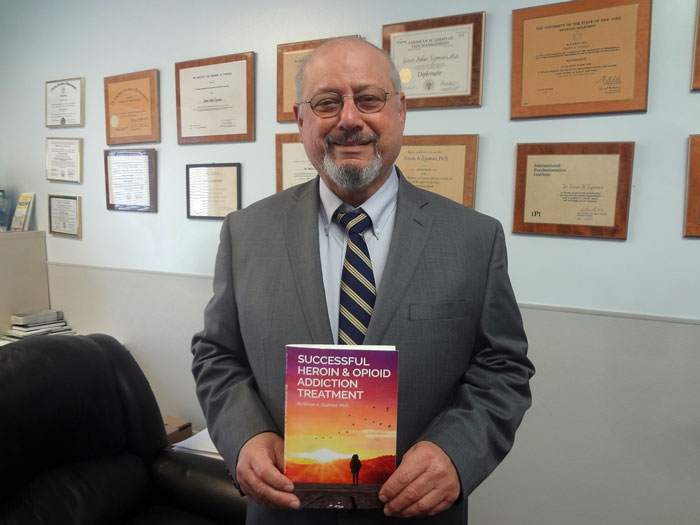 Simon A. Zysman, Ph.D., Founder and President of Employee Assistance Resource Services, Inc. Zysman earned his Bachelors Degree (BA) in psychology from Queens College, Master Degree (MS) in School Psychology from Brooklyn College, Doctoral Degree (Ph.D.) in Clinical Psychology from Florida Institute of Technology (Florida Tech), Post Graduate Training in Clinical and Experimental Hypnosis from the Institute for Research in Hypnosis in NYC, and Post Doctoral Training in Psychotherapy and Psychoanalysis from The Long Island Institute of Psychoanalysis at Nassau County Medical Center.
Dr. Simon A. Zysman is a licensed clinical psychologist and a revered pioneer in opioid addiction treatment. He is the founder of Employee Assistance Resource Services, Inc. (EARS), an outpatient clinic located in Smithtown, NY which currently holds one of the highest success rates in treating opioid dependence in the state of New York.
Opioid addiction affects people from all walks of life,” Dr. Zysman said. “Teachers, doctors, lawyers, businessmen, tradesmans, etc. Drugs don’t discriminate by race, religion, or gender. We’re all potential victims of this disease.”
In recent years, opioid addiction often occurs through no fault of the addicts themselves. Dr. Zysman notes that dependency is more likely to start at the hands of a doctor inadvertently over-prescribing pain meds than by some seedy drug dealer working a street corner. Commonly, someone could simply be injured in the workplace and be prescribed painkillers in conjunction with physical therapy to help them heal and recover. However, due to the very addictive nature of opioid-based painkillers, soon an average person could find themselves uncontrollably spiraling down an endless whirlpool of addiction, Dr. Zysman said.
As they continue to use the painkillers, patients can develop a tolerance, and over time issues like this have grown to the point that it’s become an epidemic,” he said. “The opioid overdoses are inundating the emergency rooms, courts, over utilizing the services of first responders, and also the morgue, to the point that they can’t accommodate all of the bodies that are being generated via drug overdoses.”
Sadly, opioid addiction can often lead to criminal behavior Dr. Zysman noted.
Often, as someone develops an addiction to their pain medication, what happens is the doctor won’t write them any more prescriptions. As a result, they’re forced to reach out to drug dealers to get more pain meds,” he said. “Another thing some people do when they are addicted is something known as ‘doctor shopping’…they will go to one doctor, and then another doctor, and another, getting one prescription after another, so they can satisfy their drug habit and avoid getting dope sick.”
Thankfully, Dr. Zysman said, steps have been taken by the Drug Enforcement Agency (DEA) to curb the practice of doctor shopping through a program known as I-STOP. A prescription monitoring program and database that pharmacies document when they fill prescriptions for addictive medications. Doctors use this system to track how much pain medication a patient is currently taking. In addition, doctors who may have been over-prescribing painkillers in the past – and unknowingly contributing to the massive opioid epidemic currently gripping the nation – have been collectively scaling back their scripts to more conservative levels in response.
Part of the problem has to do with medical schools not adequately educating and training doctors about the whole issue of addiction…however, due to the current opioid epidemic, doctors have been cutting down on the amount of painkillers that they prescribe in recent years,” Dr. Zysman said. “For example, in the past a dentist may have written a prescription for 30 to 60 Vicodin for a tooth extraction. Today, that practice has changed dramatically. Often, the dentist or oral surgeon, will only give enough medication for five days as opposed to enough for a month or two. As they’re getting more knowledgeable about addiction, they’re making an effort to minimize the probability of their patients becoming addicted to pain medication.”
Earlier in his career Dr. Zysman worked at Kings Park Psychiatric Center, and while there he took a survey on the psychiatric unit of new admissions to the facility, discovering that at least 60 percent of them had drug and alcohol dependency issues. However, at the time – the early 1980’s – substance abuse was classified as a mental illness, and not as a disease in its own right as it is today; as a result, the treatment options utilized were ineffective, rendering the facility itself to something of a revolving door for addicts.
Substance abuse treatment at the time was in its infancy. Also, if a drug addict was admitted they would not share information about their drug problem for fear that they would be turned into the authorities,” he said. “So what would happen is that they would come in, be stabilized, detox on the psychiatric unit, and be discharged. Then they would relapse and come right back.” They became known as the revolving door patients.
In May of 1986 Dr. Zysman founded his Smithtown-based EARS outpatient clinic. Dr. Zysman and his staff endeavored to serve their substance abuse patients to the best of their abilities in their attempts to help them overcome their addictions. Initially starting as an alcohol and drug-based treatment center. As the heroin and opioid epidemic continued to escalate on Long Island and throughout the United States, more opioid addicted patients presented themselves for treatment at EARS. Dr. Zysman and the EARS program clinical staff became determined to find more effective methods of treating heroin and opioid addicted patients. However, despite their considerable efforts, they found that their average success rate for treating opiate addicted patients hovered between 3 and 5 percent. This number, shockingly, was nonetheless slightly higher than the state average, illustrating how dire the situation was and how much more effective opioid treatment options were needed.
But over the years, and in conjunction with several noted medical doctors and psychiatrists, Dr. Zysman made a breakthrough in terms of combating opioid addiction, to the point that EARS’ success rate hovered between an astonishing 70 to 90 percent retention rate with opioid addicted patients. This was a substantial improvement over prior years for the EARS program.
It has to do with our understanding of the dynamics of the disease of addiction and the medications used to treat it,” he said. “We specialize in providing a combination of various medications and counseling that allows us to have much better outcomes.”
One of the chief problems facing addicts when attempting to get off opioids is the fact that going “cold turkey” causes the patient to experience acute withdrawal symptoms, such as a complete loss of productivity, an inability to sleep or function normally, severe depression, and even strong suicidal urges. Merely spending a few days in a rehab facility is not sufficient to overcome this malady, Dr. Zysman said, as it takes a significant amount of time for your brain to even begin the process of rebounding from the physical and psychological withdrawal symptoms.
Depending on the severity of opioid addiction, it can take up to 90 days before the brain can start producing more dopamine, and to get back to normal can take anywhere from six months to two years,” he said. “And if the opioid addict has suffered damage to the synapses in the brain, they may never get back to normal dopamine levels. They would have to continue taking medicine for the rest of their lives in order to continue functioning like a relatively normal human being.”
The key to Dr. Zyzman’s approach to successfully treating opioid addiction – introduced at his clinic in 2007 – is a drug known as Buprenorphine, which aids in detoxification and short and long-term opioid replacement therapy; it effectively reduces opioid cravings and also functions as a mild to moderate painkiller, but without the addictive side-effects, Dr. Zysman said.
Dr. Zysman stated that “According to United States Library of Medicine, behavioral intervention alone has extremely poor outcomes, with more than 80 percent of patients returning to drug use. The return to drug use has significantly contributed to the high incidence of opiate overdoses and escalating death rate. Medication Assisted Treatment is needed to fill the void associated with Dopamine Deficiency Disorder,” he said. The concept of dopamine deficiency and the use of medication assisted treatment is extensively covered in his new book Successful Heroin and Opioid Addiction Treatment.
Medication Assisted Treatment involves the use of various medications which includes Buprenorphine with Naloxone, a partial agonist, that tends to block the opiate. Many of the treatment programs are based on the concept of abstinence, which means going without any medication at all. But without any kind of medication intervention, the likelihood of the patient succeeding is extremely poor, which is why many patients have difficulty recovering from opioid addiction.”
Dr. Zysman noted that there are many groups and individuals in the recovery field who feel that Medication Assisted Treatment has no place in addiction recovery efforts; this perception is something that he hopes to change with his new self-published book, Successful Heroin and Opioid Addiction Treatment. The book, which will be available by July 30th through his website and Amazon.com, covers his vast experience with addiction treatment, the development and success of his proven treatment model, and also features contributions by several noted doctors and other experts in the field, including chapters penned by his own daughter, Jacqueline P. Zysman-Weisfeld, Pharm.D. and his son Matthew L. Zysman, LMSW, both of which are also health professionals.
Dr. Zysman began writing Successful Heroin and Opioid Addiction Treatment approximately 2 years ago, although more aggressively so over the last year. At 171 pages, it is now complete and in the hands of printers, with Dr. Zysman anticipating receiving his first shipment of the new book by July 18,2018. From there, it will be available via a number of different distribution options, he said.
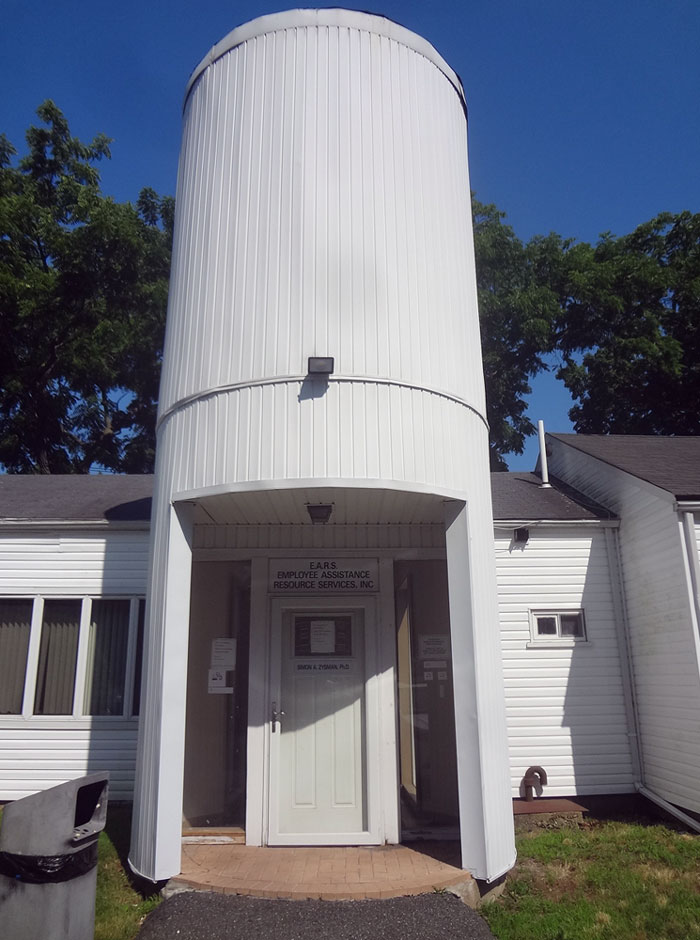 New York’s Leading Medically Supervised Outpatient Substance Abuse & Addiction Treatment Center Established in 1986, located at 278 E. Main Street Smithtown, NY 11787.
It is through the publication of his book, Dr. Zysman said, that he hopes to finally bring his successful treatment program to the masses and help bring a positive conclusion to the endless cycle of opioid addiction and relapse that has been plaguing this country.
People don’t know about this approach, and for me to just go on television or radio…how much value is that going to have without any supporting documentation to substantiate what I say? Without a book, how are they going to be able to apply our treatment model?” he said.
In addition to an exhaustive amount of information about his experience and the success of his heroin and opioid treatment program, the book also contains several testimonials of patients who have turned their lives around with the guidance of Dr. Zysman and his staff and are now living as happy and productive members of society.
I included these testimonials, as I thought they were very important, so that people can actually see it and hear it from the patient’s perspective and what their experience has been like being treated under our treatment model,” he said. “For example, we had one patient who had been hospitalized approximately 75 times within less than two years. Then he started treatment here, and for one year subsequently he has not been re-hospitalized. So obviously, what we’re doing here is different than what other programs provided for him in the past. As a result, it has significantly reduced the cost of his treatment. The treatment approach at the EARS program was approximately 96% less over a period of one year as compared to his 75 prior treatment experiences combined. Our treatment method has been more cost effective, yielded excellent outcomes, and our patients have more hope for the future.”
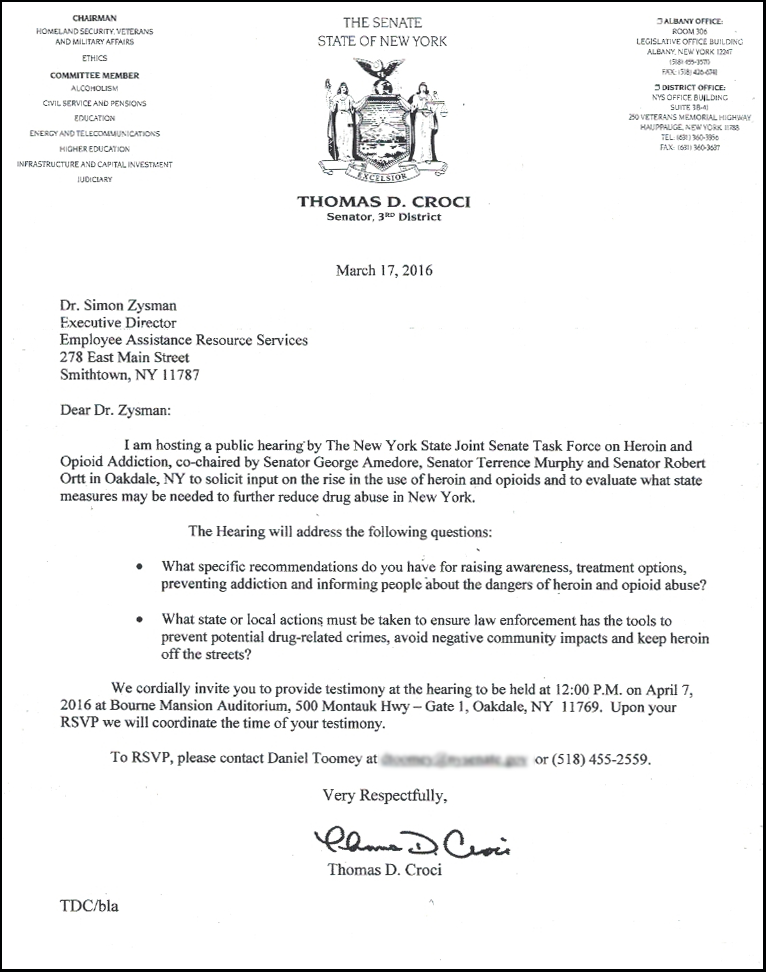
Dr. Zysman’s success – and subsequent reputation – has grown to the point that he was invited to address the New York State Senate Task Force on Heroin and Opiate Addiction on his groundbreaking treatment methodology; An anonymous NYS representative requested that he write a book on the subject based on the results of the treatment outcomes at the EARS Program. Dr. Zysman is in the process of expanding the EARS facility to accommodate more patients and staff, Dr. Zysman noted.
In the beginning, patients are here every day, five days a week,” he said. “My staff and I work with them, we monitor them, and we make adjustments to their medication based on the symptoms that they’re presenting. And the medication is done in conjunction with psychological therapy, and when possible, we encourage family involvement as well.”
Dr. Zysman said that, on a personal note, the ability to take someone at the very lowest point of their life – a good person who is just barely hanging on, desperate for help – and give them the opportunity to reclaim their lives, their health, and their hopes for the future…the feeling is truly indescribable, he said.
It gives me great personal satisfaction knowing that we’re providing a service that has helped so many people,” he said. “There was a time when outcomes were so poor, and now the outcomes are so significantly higher, and it’s a wonderful thing to witness and be a part of.”

