


(Long Island, NY) I’ve been a huge James Bond fan ever since I was introduced to the British secret agent’s films as a kid growing up in the 70’s. Back then Roger Moore played the titular role, and I reacted with stunned disbelief when informed that this wasn’t always the case- apparently, some unknown named Sean Connery portrayed Bond first (well, okay, maybe you’re heard of him).
James Bond, if you’re unaware, is the creation of late writer Ian Fleming, who depicted agent 007 of England’s secret service in a number of novels and short stories. Bond was a debonair yet ruthless spy armed with exotic gadgets and weaponry, able to bed any woman who came across his path, all while saving the world time and again from various sundry super-villains. But while Fleming’s stories proved popular, it wasn’t until they were translated into a super-successful series of motion picture adaptations (some more loyal to their source material than others) that Bond became a household name.
As time went by, various other actors have taken a crack at bringing the suave MI6 operative’s exploits to life, but one thing always remained constant- the rampant speculation that occurred when the reigning Bond would retire the part and hand the mantle onto another. The public would always wonder- who would take up the role next? Most recently, Bond actor Pierce Brosnan failed to reprise the part after 2002’s Die Another Day (reportedly not by his choice, but by a decision of the studio, EON Productions), and the iconic tuxedo handed over to character actor Daniel Craig, who has since been hailed as one of the best Bonds ever. I find myself agreeing with that assessment- while Sean Connery to me will always be the quintessential Bond, Craig comes in second with his rugged, gritty interpretation of the character, combining grace and elegance with intensity and brutality.
Craig’s freshman effort as Bond, 2006’s Casino Royale, held special significance in that it was the first film of the series in many years to be based on an original Fleming novel, as opposed to an new script. To date, all of Fleming’s novels and stories had been translated by EON Productions save Casino Royale, the rights of which were purchased by a different studio many years before and filmed and released in the 1960’s as a Bond parody, of all things. EON finally managed to acquire the rights to this “missing” story and were finally able to give it the serious treatment is deserved, and Daniel Craig’s debut was widely hailed as the breath of fresh air the series needed, which at one time was accused of becoming stagnant and formulaic. Casino Royale, which “re-booted” the franchise, eschewed much of the reliance on cheesy humor, rampant womanizing, and ridiculous over-the-top action pieces, as well as toning down the silly sci-fi gadgets, and concentrated more on hard-edged realism, intense yet believable action, and (gasp!) actual character development- things sorely missing from other installments of the Bond series. As a result of mixing up the formula in this way, Casino Royale was a huge success, and people immediately began anticipating its follow-up.
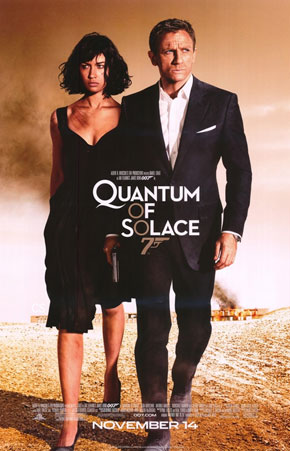 Well, here it is- Quantum of Solace, directed by Marc Forster, is a direct sequel to the events of Casino Royale. We find Bond hot on the trail of vengeance for the death of his girlfriend Vesper Lynd (Eva Green), killed in the climax of the previous film. Vesper had been manipulated, forced to betray Bond, and ultimately murdered by a mysterious organization called “Quantum,” and Bond starts tracking down those responsible. This brings him into conflict with Dominic Greene (Mathieu Amalric), an environmentalist who is secretly a member of the Quantum organization, and who intends to stage a coup d’état in Bolivia to take control of its water supply. While traveling from country to country, following leads and killing a great many people, Bond discovers an ally and potential love interest in a woman named Camille Montes (new Bond Girl Olga Kurylenko), who is on her own mission of vengeance. But when Bond discovers that Quantum is entrenched in the highest levels of British government and even his own MI6, he must use all his cunning and resourcefulness just to remain alive, let alone achieve the revenge that is eating away at his soul.
Quantum of Solace is not quite the film Casino Royale was. While the previous movie had a finely-crafted story, the sequel has almost none to speak of. Well, I suppose there was a story tucked in there somewhere, but it was pretty much lost amongst all the fight scenes and car chases. Quantum of Solace does experience a lull in action mid-point but the story doesn’t bother to take up the slack, and as a result the film starts to meander and drag until things start blowing up again. It’s a shame- Casino Royale was a beautifully honed tale, so obviously labored upon in terms of script, and painstakingly brought to life by characters that were interesting and dynamic. A great deal of that was lost in Quantum of Solace- the storytelling was discarded in favor of punches, kicks, crashes, and things that blow up real nice. Oh, and let’s not forget about the uninteresting characters that you won’t care about. For example, Camille Montes, the new Bond Girl that I mentioned above, is a total bore and makes you wish Vesper Lynd could somehow come back from the dead.
Now, don’t get me wrong- Daniel Craig turns in another great performance as Bond, but he just has so much less to work with here. I know he’s supposed to be upset and driven by revenge in this film, and that can make a chap rather unpleasant, but as a result he’s lost a lot of the charm he brought to the role in Casino Royale. This fact, coupled with all the one-dimensional supporting characters he’s forced to share screen time with, all adds up to a Bond film that fails to capture you like the last one.
And that brings me to another flaw of Quantum of Solace- it just doesn’t feel like a James Bond film. Casino Royale introduced the world to a tougher, edgier Bond, yet he retained the trappings of a gentleman established in the series prior. But this new film ignores all that in favor of imitating the recent Jason Bourne spy films starring Matt Damon. Nearly all of the Bond trademarks have completely vanished (such as gadgets, cars, cool bad guys, charisma, humor, booze, etc), replaced by washed-out color palettes, headache-inducing shaky camera work, and MTV-style rapid-fire editing during fight scenes, ensuring that you can’t see that the hell is happening. The people calling this movie “James Bourne” have the right idea.
Despite all these complaints, Quantum of Solace is a solid action movie- it just falls way short of the high mark set by Casino Royale, which was one of the finest Bond films in years- perhaps even decades. Can a James Bond movie only be really good if it’s based on an Ian Fleming novel? I’d like to say no, but the past is making me think twice about that. I hope Daniel Craig’s next outing as everyone favorite super-spy is given better treatment- whereas Casino Royale was crafted as if with a surgeon’s scalpel, Quantum of Solace feels more like they used a hammer and chisel. If this franchise re-boot is to continue its success, they need to concentrate more on story and character in the sequel and less on things that go boom.

 I’m telling ya, Smith came close to nailing it (ha!) with this one. Zack and Miri Make a Porno started out well enough…it was funny, flowed well, and starred a cast that obviously had a fairly good bond with one another behind the scenes (Seth Rogen and Elizabeth Banks had previously starred together in The 40 Year-Old Virgin, and their chemistry here was very apparent). Sure, the trademark geeky verbal tirades and speeches started popping up as usual for a Kevin Smith film, but overall the experience was enjoyable and the humor was more genuine, as opposed to the way Smith tries to normally sledgehammer it into our heads.
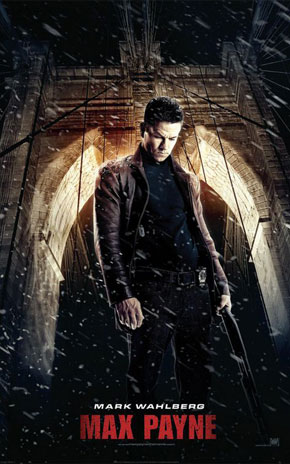 So, I mentioned earlier that Max Payne was a below-average movie. Here’s where I tell you why- it’s poorly paced and annoyingly dumb. Dumb how? Well, remember that drug I mentioned, the one called Valkyr? Well, whenever somebody takes it, they have these goofy hallucinations involving demons flying around and attacking them. Never mind the nonsense all users of the drug, people all with different psyches and brain chemistries, would all have the same exact visions when under its influence. But the film also goes out of its way to attempt to blur the lines between what is and isn’t real, and the results end up just being silly. People are killed and at times it’s made to look like perhaps the demons did it, when they don’t even exist.
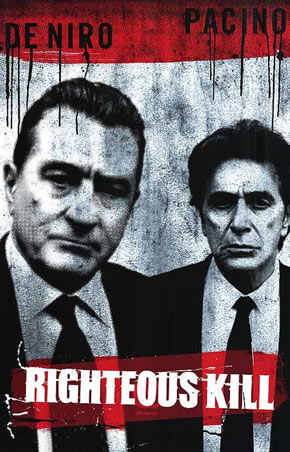 Of course, the possibility of a vigilante cop on the force leads to some cloak and dagger shenanigans, with the spotlight being cast squarely on one individual for most of the film’s running length. But things are never that obvious, and the question is apparent- did he really do it, or is someone else behind everything? Of course, this builds up to a twist at the film’s climax which isn’t really much of a twist, but more of a…half-turn, maybe? A quarter-step? I’m not sure, but if you have any reasoning abilities at all, you shouldn’t walk out of Righteous Kill shaking your head at how that brilliant director and screenwriter pulled the wool over your eyes.
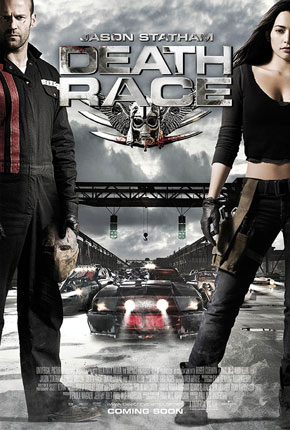 Unbeknownst to the general public, however, Frankenstein did not survive. But the prison’s evil warden (aren’t they all?) plans on extending Frankenstein’s legend (and the juicy buy-rates he ensures) as long as possible. Warden Hennessey (
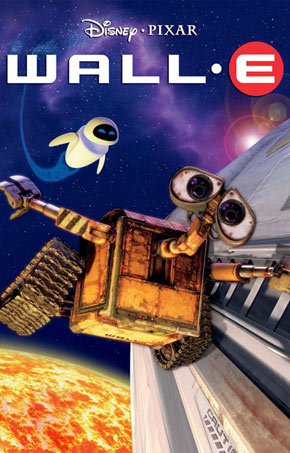 Looking to deliver the knockout blow, he presents EVE his coup de grace: a plant he found while out working one day. True to her programming, EVE automatically stores the plant inside herself, shuts down, and begins transmitting a homing beacon. Despondent that his new friend no longer ambulatory or responsive, WALL-E tries to keep her safe until the spaceship returns for her. Stowing aboard the vessel, WALL-E eventually encounters what humanity has become after 700 years in space, makes friends with some screwball malfunctioning robots, and uncovers a conspiracy to prevent mankind from reclaiming the Earth, all while pursuing the love of EVE. Doesn’t that sound sweet?
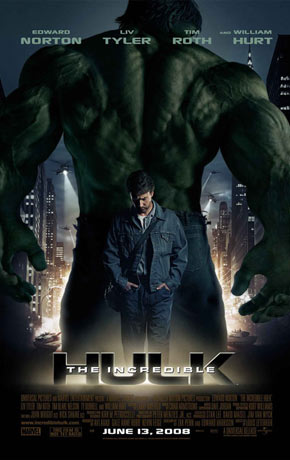 After Ang Lee’s Hulk was released, the rights to the character reverted back to Marvel, and they set about making plans for a sequel, keeping in mind the complaints aimed at Lee’s version.
 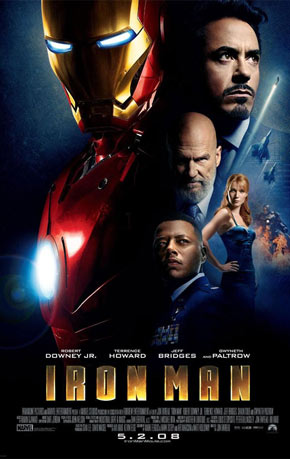 However, en route back to headquarters after the demonstration, Stark’s convoy is attacked and he finds himself seriously wounded and captured by very rude terrorists. Armed with spiffy Stark Industries weapons and oddly aware of exactly who he is, they demand Stark build a missile for them out of a heap of scrap that would make Fred Sanford jealous. With the aid of a fellow captive, Stark first constructs a miniature arc reactor to power an electromagnet “pacemaker” which protects his heart from shrapnel in his chest, embedded during his capture. And as a nice F-U to his captors, Tony decides not to build a missile but instead a crude armored exoskeleton, which he uses to stomp the terrorists into the ground and make his escape, A-Team style.
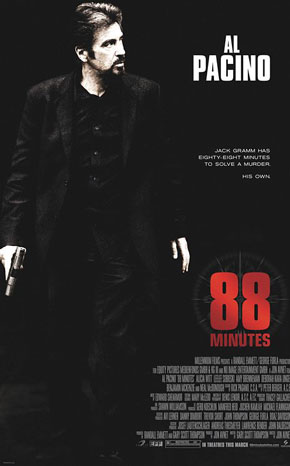 Plus, at 67, Pacino is in pretty damn good shape. He’s shown sprinting up stairways and across hallways like Carl Lewis, leaving me feeling ashamed that this man could probably leave me in his dust- and I’m half his age. I’m badly in need of 200 hours on a Stairmaster…
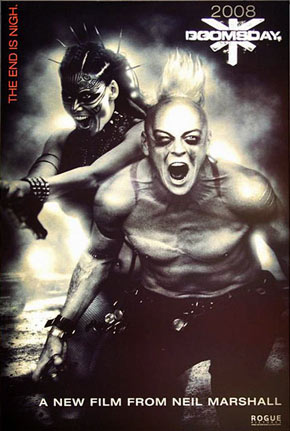 27 years later: the year is now 2035, and the Reaper virus has re-emerged and now comes home to roost in jolly old England. Instead of building a wall around themselves and waiting to die, this time around Brits actually decide to pool their resources and attempt to find a cure. Their main lead comes in the form of satellite surveillance photos taken in the quarantined Scotland that show signs of survivors. Believing that these survivors may be resistant to the virus and in turn may hold the key to a possible cure, a team is assembled to enter the entombed country to seek these Scots out, presumably to be prodded, poked, and ultimately dissected in the name of the good people of England.
