


(Long Island, NY) We Own the Night is a crime drama set in Brooklyn, NY during the late 1980’s, an era known for its decadence, style, and big, big hair. The film focuses on the Russian mob’s emergence on the local drug scene and the violence that follows, and how it relates to a dysfunctional family with members caught on both sides of the conflict. The film’s unusual title is actually based on the NYPD’s slogan in the war on drugs at that time, although the drug issue is more of a backdrop to the family drama present throughout the movie.
A gritty film set amongst the Russian night clubs and seedy alleyways of Brighton Beach, We Own the Night chronicles a family of cops trying to make a difference in their community. It’s an uphill battle, however, as the new drug-fueled crime wave created by the Russians finds the police force out-manned and out-gunned. The death toll mounts as Joseph Grusinsky (Mark Wahlberg), son of Police Chief Burt Grusinsky (Robert Duvall), is promoted and given the unenviable task of cleaning up the streets. Needless to say, our Vodka-swilling friends don’t appreciate Joseph’s efforts and come upon him late at night, leaving him with a bullet in his head. Joseph survives, but is laid up in the hospital for months, eventually being released and resuming leadership of his team. However, while the physical scars the attack has blemished him with Robes de bal courte have healed, Joseph has developed mental ones as well, and it is these scars that will prove to be the more debilitating of the two.
Meanwhile, Joseph’s estranged brother, Bobby (Joaquin Phoenix), is enjoying the good life. Bobby’s a manager of a nightclub owned by the very same mobsters responsible for his brother’s attempted assassination, and seems to have an endless supply of money, alcohol, and fun. However, among all this revelry, there’s the possibility of a wee little problem brewing- you see, the Russians are unaware of Bobby’s blood connection to law enforcement, as he runs the club under an alias (“Green” as opposed to “Grusinsky”). I think we can all imagine what would happen to dear old Bobby Green if news of true identity were to leak out, but luckily, this hasn’t happened…yet.
Until now, Bobby has led a hard-partying, carefree lifestyle, and is generally disinterested in the moral decay around him. But the attempted murder of his brother seems to awaken him from his stupor and, with his girlfriend Amada (Eve Mendez) reluctantly in tow, he attempts to help bring the Mob leaders who ordered the hit to justice. Bobby’s transformation from greasy degenerate to fine, upstanding citizen isn’t a smooth one, however, and a whole lot of lead will fly before our film reaches its conclusion.
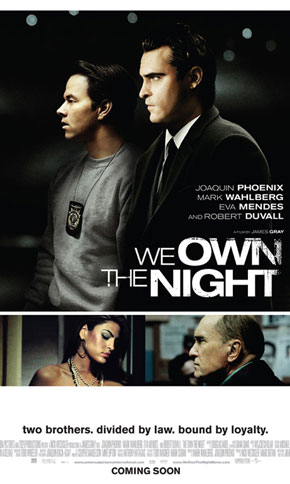 Again, I’m reviewing a movie starring everyman actor Marky Mark Wahlberg, and again he turns in a solid, serviceable performance as a recently promoted police officer given his own task force and thrust in above his head. It winds up being a more complex role than one would think, one where he’s forced to showcase his character’s myriad vulnerabilities. Personally, I feel it’s his best piece of pure acting since Boogie Nights, and that’s a big compliment.
Joaquin Phoenix continues to be the chameleon of the acting industry, seamlessly flowing into a role once again and actually becoming the character instead of simply reading lines and collecting a paycheck. His Hollywood resume is as varied as they come, playing a plethora of different personas, and We Own The Night is no different. For an example of what I’m talking about, if you watched Ridley Scott’s epic Gladiator, followed by this film, you might be shocked to discover that Phoenix is in both of them. These are just two of the many movies that illustrate the vast difference with which this guy can play his parts.
Filling the role of their father is Robert Duvall, whose character is a Police Chief that, frankly, looks waaay too old to be an actively serving officer. But other than his very crusty, weathered appearance, Mr. Duvall shows us all why he is such an esteemed veteran of Hollywood, as he touchingly portrays a gruff old man struggling to protect his family and community against a brutal threat unlike any he’s seen before.
Overall, We Own the Night is a solid, exciting, and emotional film. The only flaw I could really cite would be the complete 180 degree turnaround that Phoenix’s character takes halfway through the movie. One minute, he’s a crooked nightclub manager that doesn’t care about anything and often starts rabid arguments with his family, and the next he’s taking the police exam and everyone’s all lovey-dovey. It’s a tad hard to swallow, but the events that compel him to change are so extreme that I suppose I can forgive this. And if you can get past that (it’s not that hard), you’ll find We Own the Night is a tightly-paced, excellent drama worthy of your time. Highly recommended.

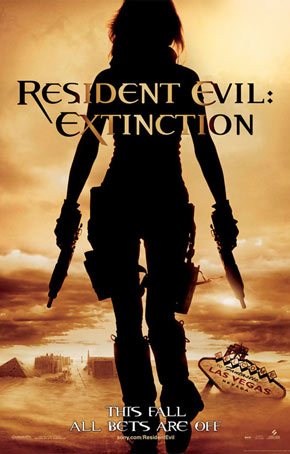 The Resident Evil film series, which deviates slightly from the ongoing plot of the games, follows the evil machinations of the Umbrella corporation, a multi-national conglomerate that specializes in bio-organic and viral weapons for the U.S. military. Their crowning achievement is the development of the deadly T-virus (no relation to Mr. T, although I pity the fool exposed to it), a mutagenic agent that kills those infected and re-animates them as bloodthirsty zombies. Through internal espionage, the T-virus is released into one of Umbrella’s research facilities, and from there spreads to the town of Raccoon City, transforming its innocent inhabitants into savage monsters. In an attempt to contain the virus before it spreads further, the military drops a nuke on the once-peaceful mountain town. Now, we’ve all seen this done before (Return of the Living Dead comes to mind) and, as we all know, it never works. And guess what? It doesn’t work this time, either.


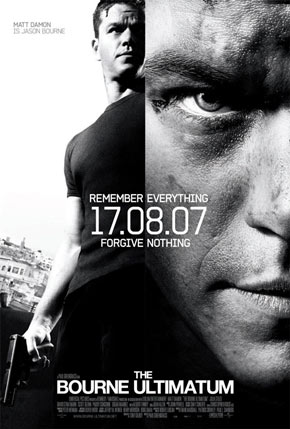 Robert Ludlum only penned three
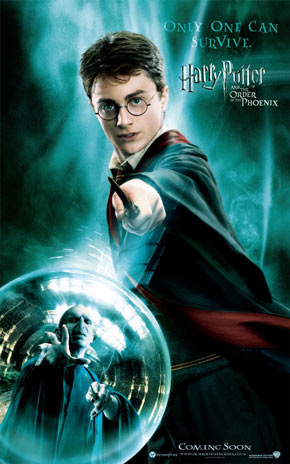 The Ministry’s odd behavior doesn’t stop with simply ignoring the magical equivalent of Hitler and the grave threat he poses to the planet, oh, no- they go one step further and
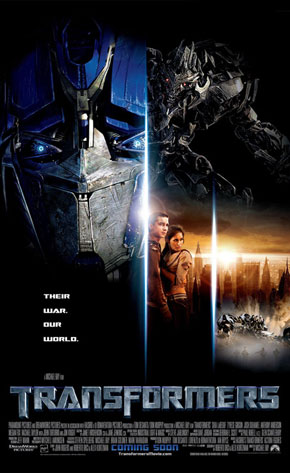 Sam takes his new ride out for a spin and as luck would have it, it’s about this time that Mikaela realizes that her current beau is a creep and walks out on him. Sam uses this opportunity to do the right thing- he dumps his friend to the curb and offers Mikaela a ride home. On the way, Sam’s Camero seems to be doing everything in its power to help him woo his passenger, at one point even pretending to break down at a strategically romantic location. Later, the Camaro exhibits more odd behavior, like driving itself and even transforming into a giant robot, an event that Sam witnesses. Shocked by this (indeed, Camaros didn’t come with these options until 1975), Sam runs to the nearest police car, which ALSO transforms into a giant robot- however, this one proceeds to
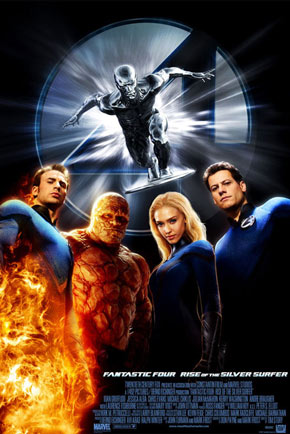 Well, movie studios do love their successful franchises, so naturally we’re now being treated to a sequel, entitled Fantastic Four: Rise Of The Silver Surfer. What’s a Silver Surfer, you may ask? It’s this chrome guy that looks like the T-1000 from Terminator 2 who flies around space on a surfboard. Yeah, a surfboard. I know it sounds silly, but in motion it actually looks pretty cool, so have an open mind, okay? The longer answer is that he is a herald for a planet-eating force of nature known as Galactus. The Surfer scouts space ahead of his master, seeking planets for Galactus to suck the delicious life-energy out of like a giant Starbucks Java Chip Frappuccino, leaving them barren, lifeless husks. For the one person out there who hasn’t already guessed, allow me ruin your surprise- yes, Earth is next on the menu.
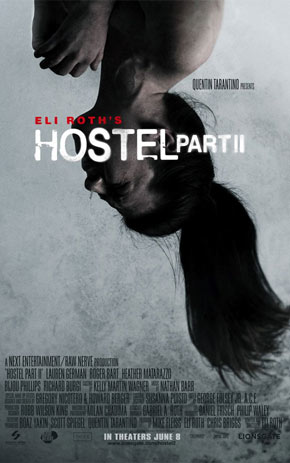 Now, the bidding begins. Pictures are circulated to prospective “clients” via the internet and an auction of sorts ensues. It is at this point that we are introduced to our second group of protagonists,
